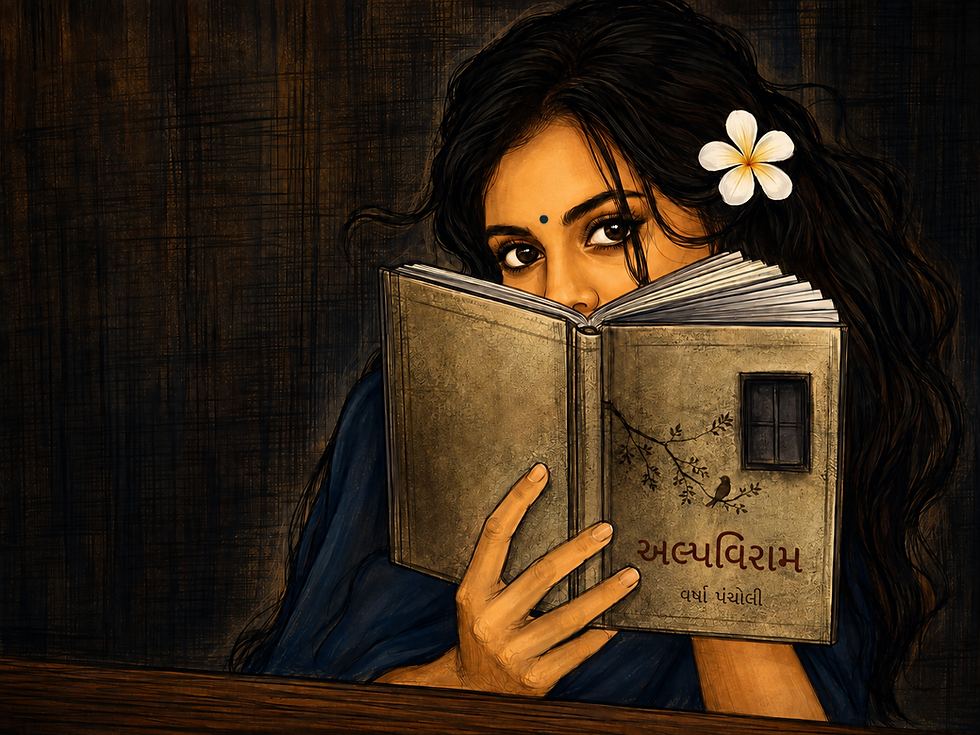
The Bag Is Empty


The Bag Is Empty
It was a sunny afternoon in the middle of May, the kind of afternoon when the city does not move so much as endure. The sun stood above everything with a punishment that felt personal. Heat fell on the head, rose from the road, entered the eyes, and made even silence seem tired. Shadows had grown short beneath parked cars and compound walls. The trees beside the road stood without movement, as if their leaves had accepted defeat. The dogs slept under shutters. The hawkers sat with wet towels around their necks. The roads were empty and quiet, not because the city was peaceful, but because everyone who could hide from the afternoon had already hidden.
For me, it was a perfect time to shop.
I had always liked going to the mall on a working afternoon. Hardly anyone came out in such heat unless there was a reason. There were no slow families blocking the aisles, no crowded billing counters, no children crying for chocolates, no impatient people leaning over trolleys. There was only space, order, cold air, and the brief illusion that the world could be managed if one entered it at the right hour.
That day I carried a long list in my pocket. Groceries. Vegetables. Fruits. Daily needs. Medicines. A few electronic items. A few home decor items. A few home essentials. Things that had been pending for days. Things that looked ordinary on paper, but had begun to feel heavy because every ordinary task in my life had to pass through a climate of fear before it could be completed.
I reached one of the biggest malls in the city a little after one. The parking lot was almost empty, as I had expected. I parked my car easily and sat for a moment before getting out. The heat pressed against the windshield. Inside the car, the air had already begun to thicken. I took out the list and unfolded it.
I had written it the previous night.
I remembered sitting at the dining table after everyone had gone to sleep, writing each item slowly, carefully, as though making a list was not a household act but a small private rebellion. Rice. Oil. Flour. Sugar. Tea. Cleaning liquid. Toothpaste. Soap. Medicines. Batteries. Kettle. Storage boxes. Towels. Fruits. Vegetables. Curtains. Cushions. A table lamp. I had written each word with unnecessary care because care was the only protection I had learned to trust.
It is difficult to explain to someone who has lived in a normal home why a shopping list can feel dangerous.
In some houses, a forgotten item is just a forgotten item. In some houses, a wrong brand is only a wrong brand. In some houses, buying two cushions instead of one does not become evidence of selfishness, stupidity, carelessness, or moral failure. In my house, everything could be used. A missing medicine could prove that I never listened. A more expensive packet could prove that I had no discipline. A cheaper alternative could prove that I did not care. A delay could prove disrespect. A decision could become an accusation. The smallest object could be lifted from its place and turned into a knife.
So I checked the list once more before stepping out.
The heat struck me as soon as I opened the door. I crossed the empty parking lane quickly and entered the mall through the glass doors. The change was immediate. Cold air covered my face and neck. The polished floor shone under bright lights. Somewhere far away, there was the smell of popcorn. Somewhere else, perfume. Plastic. New clothes. Coffee. The mall had the strange artificial calm of places where everyone is meant to feel safe because everything is arranged, priced, lit, and watched.
I went straight to Reliance Mart.
The store was huge. So was the list. I took a trolley and began moving through the aisles. I did not rush. I did not trust myself enough to rush. I checked every item before putting it in the trolley. I crossed each word on the list only after confirming the packet, the size, the brand, the quantity. The trolley grew heavy with each section. Groceries first. Then cleaning items. Then toiletries. Then medicines. Then fruits and vegetables. Then the electronic section. Then household goods. Then home decor.
I remember the sound of the trolley wheels against the floor. I remember the cold handle against my palms. I remember comparing two brands of cooking oil longer than necessary because somewhere inside me lived the fear of being questioned later. I remember picking up a table lamp, putting it back, walking away, returning, picking it up again, and finally placing it in the trolley with the quiet guilt of someone who has forgotten that he is allowed to choose.
After two and a half hours, the trolley was full. Then it was more than full. Packets leaned against bottles. Fruits rested near detergent. The kettle sat among vegetables like a small silver animal. The storage boxes were balanced carefully at the side. I looked at the list one final time. Every item was ticked.
Luckily, there was no waiting at the billing counter.
A young boy stood there in the uniform of the store. He could not have been more than twenty. When I reached the counter, he folded his hands and smiled.
“Namaste, sir. Welcome.”
It was a company sentence, of course. A sentence given to him by training, repeated hundreds of times every day. Yet his smile was young enough to seem innocent. He began scanning the items one by one. The machine beeped steadily. Rice. Oil. Sugar. Soap. Medicines. Fruits. Kettle. Storage boxes. Curtains. The bill grew. The pile on the counter shifted and reduced as he scanned and placed things aside.
Then he asked, “Sir, do you have bags, or should I add cotton bags?”
I looked at the quantity of things and said, “Add three.”
One or two would not have been enough.
He opened three cotton bags and began putting the items inside them. He did it carefully. Heavy things first. Smaller things in the empty spaces. Medicines together. Fruits gently. Cleaning items separate. I watched him work with the practiced rhythm of someone who knew how to make things fit. Soon all three bags were full. A few larger items did not fit because of their size, so he kept them outside the bags.
When the payment was done, he looked at the trolley and said, “Sir, should I help you take this to the parking?”
I nodded without a thought.
I was tired. My legs ached. My shirt was damp beneath my arms despite the cold air. I had spent two and a half hours walking through aisles with a list that felt heavier than the goods. When help was offered, my body accepted before pride could object.
The same boy came around the counter and helped me push the trolley toward the exit. The glass doors opened and the afternoon heat returned like a slap. We crossed the open stretch toward the parking. The lot was still nearly empty. My car stood where I had left it, waiting under the white glare of the sun.
I opened the boot.
The boy lifted the bags one by one and placed them inside. First bag. Second bag. Third bag. Then he placed the larger items beside them. The kettle. The storage boxes. The home decor pieces. The electronic items. Everything went in. I thanked him. He smiled again, wiped his forehead with the back of his hand, and returned to the mall.
It was almost four in the afternoon.
I sat in the driver’s seat and closed the door. For a moment, I rested my head against the seat before starting the car. I was exhausted, but there was also a small satisfaction inside me. It was an ordinary satisfaction, almost embarrassing in its simplicity. I had completed the task. I had entered the store with a list, found every item, paid for everything, and placed it in the car. No one had interrupted me. No one had corrected me in the aisle. No one had watched over my shoulder. No one had turned one choice into an argument.
For some people, freedom announces itself through dramatic acts. For some, it begins with a trolley full of groceries and three cotton bags in the boot.
I drove home.
The roads were still quiet. Heat shimmered above the tar. At traffic signals, men on two wheelers waited with one foot on the ground and cloths wrapped around their faces. I remember touching my pocket twice to make sure the bill and list were still there. I remember thinking of cold water. I remember thinking that I should put the medicines away first. I remember nothing unusual.
When I reached home, I parked the car. I got out, took the keys, and opened the boot.
The three bags were there.
I reached for the first one and lifted it.
It rose too easily.
There are moments in life when the body understands disaster before the mind can name it. My wrist felt the lightness. My fingers felt the absence of weight. My eyes saw the bag opening slightly in the heat. Still, my mind refused.
I opened the bag fully.
It was empty.
I stared into it. There was nothing inside. No rice. No sugar. No medicines. No fruits. No soap. No small packet of batteries. No little object that could prove two and a half hours of effort had not vanished between one breath and the next.
I put the first bag down and opened the second.
Empty.
I opened the third.
Empty.
For a few seconds, I stood beside the car with the boot open and the sun burning the back of my neck. The larger items were gone too. The kettle had vanished. The storage boxes had vanished. The home decor items had vanished. Everything that had not fit inside the bags had also disappeared.
I checked again. I checked twice. I checked thrice. I put my hands inside the bags and shook them as though something invisible might fall out. I pressed the corners. I turned them over. I looked at the floor of the boot. I checked the rear seats. I bent down and looked under the seats though there was no reason for anything to be there. I closed the boot and opened it again, as if the world might correct itself out of pity.
Nothing changed.
The bags were empty.
At first, anger came because anger is easier than terror. My thoughts began to run wildly. The boy looked too smart. Had he actually placed the items in the bags? Had he exchanged the bags? Why did he offer to help me to the parking? Had he somehow placed empty bags in the boot and kept the full ones back? Had the bags torn somewhere? I checked them again. They were strong. Perfect. Not a tear. Not a hole. Not even a loose stitch.
Then where were the things?
The anger sharpened. It needed a target. It found the young boy, his company smile, his folded hands, his offer to help. I slammed the boot shut, got into the car, and drove back to the mall faster than I should have. My hands gripped the steering wheel so tightly that my fingers hurt. All the way there, I prepared my words. I would not be polite. I would not be fooled. I would not let anyone make a joke of me.
I reached the mall, parked badly, and rushed inside.
The cold air hit my face, but it did not calm me. I went straight to the billing counter. The same boy was there. He was scanning items for another customer. When he saw me, he recognised me immediately.
“Sir?”
“Where are my things?” I shouted.
His hand froze over the scanner.
“All the items I bought from here. Where are they?”
The customer at the counter stepped back. Two staff members turned toward us. The boy looked shocked.
“Sir, I put all the items in the bags,” he said. “You bought three bags. I came with you to the parking. I put everything in your boot myself.”
“You are lying.”
“Sir, I am not lying.”
“When I reached home and opened the boot, the bags were empty. Nothing was inside them.”
By then, more staff had gathered. A few customers stood at a little distance, watching with the careful curiosity people reserve for someone else’s humiliation. The boy looked frightened now, but he did not become rude.
“Sir, this is not possible,” he said. “I am sure I put the bags and the other items in your car.”
“You think I drove back in this heat for fun?”
“No, sir. I am only saying what happened.”
The argument grew. The store manager came. He was calm in the way managers become calm when they are trying to prevent a scene from becoming a complaint. He asked for the bill. I gave it to him. He asked me to come inside so we could check the CCTV.
We watched the footage.
There I was, entering the store with the trolley. There I was, moving through the aisles. There I was, checking the list. There I was, placing each item into the trolley. There was the boy at the counter, scanning everything. There were the three cotton bags being filled. There were the larger items placed aside. There was the same boy walking with me toward the parking. There was my car. There was my hand opening the boot. There were the bags, full and heavy, going inside one after another. There were the larger items placed beside them.
The boy was right.
The room became quiet.
The truth was there on the screen, cold and perfect, without emotion and without mercy. It had no compassion for my confusion. It did not care that my hands were shaking. It did not care that I had shouted at an innocent boy. It did not care that my memory, my fear, my anger, and my shame were all standing inside me at once, each one accusing the other.
The CCTV had proved that I had shopped.
It had proved that I had paid.
It had proved that the bags had been filled by the same young boy who had scanned every item with his careful hands and later helped me carry them to the parking.
It had proved that the bags had been placed in my boot.
I apologised to the boy, but even my apology felt too small for the damage I had carried into his day.
“I am sorry,” I said.
He nodded quickly. “It is okay, sir.”
It was not okay. I had frightened someone who had done his work honestly. I had arrived with terror inside me and turned it outward. That knowledge would return to me later with greater force. At that moment, I could barely stand under the weight of what I did not understand.
I walked back to the parking and sat inside my car.
I started the engine. I turned on the air conditioning. The cold air touched my face, but my body remained feverish. I did not drive. I did not call anyone. I did not know what words could be used for something that seemed to have happened and not happened at the same time.
So many thoughts rushed through my mind that they stopped being thoughts and became noise. They became a swarm. They became broken glass moving inside my skull. One moment I was certain that everything had happened exactly as I remembered it. The next moment I wondered whether anything had happened at all. Perhaps I had not gone to the mall. Perhaps I had not bought anything. Perhaps I had imagined the list, the trolley, the bill, the bags, the boy, the parking, the boot, the entire impossible afternoon.
Then I looked at the bill.
Then I looked at the list.
Then I remembered the empty bags.
The evidence was real, but it did not comfort me. It frightened me more. Reality stood before me with all its documents in order, and still my mind could not accept it as safe. Something inside me had split into two rooms. In one room, I knew what had happened. In the other, I doubted the knowing. I moved between those rooms helplessly, like a man searching for himself in a house where all the mirrors had been turned toward the wall.
For a moment, I felt I had lost my identity. Not my name, not my address, not my age, but that deeper identity by which a human being says, I was there, I saw this, I know this happened. That identity had begun to dissolve. I was sitting in my own car and yet watching myself from somewhere far away. My hands were on my knees, but they did not feel like mine. My breath was entering my body, but the body did not feel like a place where I lived.
Perhaps the most violent theft is the one that leaves no broken lock, no torn cloth, no witness brave enough to name it, only a person standing before absence and being asked to doubt the shape of his own hands.
The empty bags in the boot were no longer merely a puzzle of one afternoon. They had become a small, brutal theatre in which my entire life had arranged itself. There was the list I had made with care, the aisles I had crossed with discipline, the bill that proved the labour, the camera that proved the truth, and still there was the impossible hollowness waiting at the end. This is how narcissistic abuse enters the body. It does not always begin with violence large enough for the world to recognise. It begins with the quiet removal of what you know, then the patient training of your mind to suspect itself for noticing the loss. It teaches you to stand before evidence and still feel guilty for believing it. It makes absence look like your failure. It makes theft look like confusion. It makes your own reality feel like a place you are no longer authorised to enter.
When a person remains too long in a narcissistic relationship, the final theft is not money, affection, reputation, time, or peace. Those things are taken too, and they hurt. But the final theft is certainty. The abuser does not merely take from your life. The abuser trains you to doubt the hand with which you try to hold your life together. One day you stand before an empty bag and cannot decide whether someone robbed you or whether you imagined having anything in the first place.
That afternoon, in the parking lot of a mall, with the air conditioning blowing against my face and the bill trembling in my hand, I understood that I had not arrived at this confusion in a single day. No one loses faith in his own mind suddenly. No one wakes up one morning unable to trust memory, feeling, pain, intention, or truth. Such damage is built slowly, almost artistically, by someone who understands patience better than love.
I had grown up in such a house.
From the outside, it looked respectable. The doorbell worked. The curtains were clean. Guests were offered tea. Neighbours were greeted properly. Marksheets were shown with pride. Festivals were celebrated. Photographs were taken. The world saw a family because the world is often satisfied by furniture, manners, and smiling faces.
Inside, reality was never allowed to remain still.
A sentence said in the morning could be denied by afternoon. A promise made in front of relatives could disappear by night. Tears were called drama. Silence was called arrogance. Fear was called weakness. Anger, when it finally escaped, was used as proof that I was the problem. Every wound had to apologise to the hand that caused it. Every memory had to stand trial. Every version of the truth had to pass through the mouth of the person who had the power to destroy it.
A narcissist inside a family does not always look like a monster to the world. That is why the damage survives so long. The monster learns language. The monster learns respectability. The monster learns sacrifice as performance. The monster learns how to stand before guests with sweetness and return to the room with poison still warm on the tongue. A demon does not always arrive with fire. Sometimes it arrives wearing the face of authority, parenthood, duty, concern, tradition, and love.
A child raised in that climate does not grow up filling his own bag. He grows up carrying bags for everyone else. He fills them with obedience, achievement, usefulness, forgiveness, silence, guilt, and shame. He learns that love must be earned daily and can be withdrawn without warning. He learns that peace is not a condition of home but a temporary permission granted by the person who controls the room. He learns to become brilliant in public and invisible in private. He learns to perform normal life so convincingly that even he begins to believe the performance.
I spent my childhood trying to be good enough.
I spent my teenage years trying to be useful enough.
I spent my youth trying to be successful enough.
I spent my adulthood trying to build a life solid enough that no one could mock it, question it, or take it away.
I studied hard. I worked hard. I saved money. I built a career. I built relationships. I helped people. I stood by friends. I tried to become respectable in the eyes of the world because somewhere inside me, a frightened child still believed that respectability could protect him from contempt. I tried to build a family. I tried to rise. I tried to become someone no one could reduce to nothing again.
All those years, I thought I was filling my bag.
I placed effort inside it. I placed dreams inside it. I placed plans inside it. I placed sacrifices, salaries, promotions, friendships, festivals, duties, forgiveness, and hope inside it. I carried that bag through years of heat, insult, exhaustion, and fear. I carried it through nights when my chest hurt from swallowing words. I carried it through mornings when I looked in the mirror and saw a man already tired before the day began. I carried it because I believed that one day, when the bag was full, I would finally be safe.
But predators do not attack only when you are weak.
Sometimes they wait until you have gathered something worth stealing.
They wait with terrible patience. They watch you rise. They watch you build. They watch you become useful to the world. They study your loyalties. They learn your guilt. They learn the exact door through which they can enter. They wait for illness, failure, loss, financial pressure, family crisis, emotional loneliness, or one moment when your spirit bends under more weight than it can carry. Then they attack, not with the violence of strangers, but with the intimacy of those who know where you are already broken.
And when you finally look down, the bag is empty.
Not because you never worked.
Not because you never loved.
Not because you never tried.
The bag is empty because someone had been emptying it for years while teaching you to blame your own hands.
I sat there and thought of all the things that had vanished from my life in exactly that way. Money that had gone into emergencies that were never truly emergencies. Friendships that had died after quiet poisoning. Opportunities I had refused because someone needed me weak, available, and guilty. Dreams postponed until they became embarrassing to mention. Confidence drained through daily correction. Joy punished until I stopped showing it. Rest made impossible. Success made suspicious. Pain made theatrical. Memory made unreliable.
Then came the words that doctors, websites, books, and well meaning people use when they try to explain the wreckage after the storm has passed.
Trauma. Anxiety. Depression. Brain fog. Panic. Chronic stress. Memory loss. Hypervigilance. Dissociation. Self doubt.
Words arranged like medicines on a table.
But words do not fully explain what it is to become a stranger to your own mind. They do not explain what it is to read an old message and realise that you had proof all along, yet still did not believe yourself. They do not explain the shame of apologising to people who hurt you because their certainty was stronger than your pain. They do not explain the terror of wondering whether you are losing your mind when in truth your mind has been fighting for years to survive a war no one else could see.
People ask why survivors did not leave earlier.
They do not understand that a cage built from fear is strong, but a cage built from doubt is almost sacred in its cruelty. You do not simply walk out of it. First you have to believe there is a door. Then you have to believe you are allowed to touch it. Then you have to believe that the hand touching it belongs to you.
By the time many survivors understand this, they are no longer young. Some are in their thirties. Some are in their forties. Some are in their fifties. Some discover it after parents have died, after marriages have collapsed, after children have grown, after careers have been damaged, after friends have disappeared, after money has gone, after the body has begun to speak in symptoms because the mouth was never allowed to speak in truth.
They look around at the life they worked so hard to build, and the sentence rises like smoke from ruins.
The bag is empty.
It is a terrible sentence.
It can kill a person without stopping the heart.
I sat there and felt its full weight. I felt the years behind me. I felt the foolishness of not seeing sooner. I felt rage, grief, humiliation, and a loneliness so complete that even the parked cars around me seemed to belong to another species of life. Somewhere inside the mall, people were buying things, comparing prices, answering calls, complaining about discounts, choosing fruit. The ordinary world continued, innocent and unbearable.
I wanted to disappear.
Then I saw the young boy through the glass doors of the store.
He was back at the billing counter, scanning items for someone else. His life had continued after my accusation because life makes workers return to work even after strangers break their peace. Perhaps his hands were still trembling a little. Perhaps later he would tell someone at home about the strange man who came back shouting about empty bags. Perhaps he would laugh about it. Perhaps he would not.
A sudden pain moved through me.
I had almost become what had hurt me.
I had walked into that store carrying my terror like a weapon and placed it on an innocent person. That is how poison travels through generations. That is how unhealed wounds search for softer bodies. That is how a child raised in cruelty becomes dangerous if he does not stop, turn back, and look at the cruelty inside himself.
I opened the car door and stepped out.
The heat had softened a little, but the air was still harsh. I went back into the mall. I walked to the billing counter and waited until the customer before me had gone. The boy looked at me with caution.
I folded my hands.
“I am sorry,” I said.
He looked embarrassed, as good people often do when someone apologises with real shame.
“It is okay, sir,” he said.
“No,” I said. “It is not okay. You did your work honestly. I was wrong to shout at you.”
He lowered his eyes and gave a small nod.
I wanted to tell him that the bags were empty, but the matter was larger than the bags. I wanted to tell him that sometimes a man is not angry at the person in front of him, but at a life behind him. I wanted to tell him that I had been robbed in ways no CCTV could record. I wanted to tell him that I was sorry not only for my words, but for the long road of pain that had made those words possible.
But he was young, and he did not need my history.
He needed only my apology.
So I thanked him again and left.
When I reached my car this time, I did not sit immediately. I opened the boot. The three bags lay there, flat and hollow. I lifted one and held it in both hands. It was ordinary cotton, stitched well, strong enough to carry weight. There was nothing wrong with the bag.
That realisation hurt more than I expected.
There had been nothing wrong with me either.
I had spent a lifetime believing I was defective because I could not hold what kept being taken. I had blamed the bag. I had blamed my hands. I had blamed my memory, my softness, my anger, my need to be loved, my inability to remain unaffected by cruelty. I had believed the emptiness was my failure.
But perhaps the bag had never been the problem.
Perhaps it had simply been placed again and again into the hands of thieves.
I stood in that parking lot until the sun lowered behind the mall building and the shadows began to lengthen. For the first time that day, the city looked less merciless. Not gentle, not forgiving, but survivable.
I folded the empty bag carefully and placed it on the passenger seat.
I did not know where the purchased items had gone. I never found out. Perhaps there was a simple explanation. Perhaps there was not. Perhaps someone had removed them. Perhaps some small, practical truth existed somewhere outside my reach. But life does not always give us the kindness of a solved mystery. Sometimes it gives us something harder. It gives us a symbol so exact that it cannot be ignored.
The bag is empty.
That was the wound.
The bag can be filled again.
That was the first small act of hope.
It did not feel like hope at first. Hope did not arrive with music. It arrived as a tired man sitting in a car, deciding not to go home immediately. It arrived as a phone call to a friend whose number he had not dialled in years because he had been made to feel like a burden. It arrived as the courage to say, “I am not well, and I need help.” It arrived as the decision to find a therapist. It arrived as the first note written in a diary. Date. Time. What happened. What I remember. What I know to be true.
Hope was not beautiful in the beginning.
It was practical.
It was drinking water. It was eating dinner. It was sleeping with the phone switched off. It was keeping the bill. It was not deleting the messages. It was reading about abuse and crying because someone on the other side of the world had described my life more accurately than my own family ever had. It was learning that love without safety is not love. It was learning that duty without dignity becomes slavery. It was learning that forgiveness demanded by the wounder is only another form of control.
I drove away from the mall that evening with one empty bag beside me.
I did not feel victorious.
Survivors rarely do at the beginning. They feel ashamed, foolish, exhausted, late. They count the years and think the arithmetic is final. They say they should have known. They say they should have left. They say they should have understood. They stand before the ruins of themselves and believe rebuilding is impossible because the best years are gone.
But the best years are not always the years before the breaking.
Sometimes the best years are the ones after it, because those are the years in which you finally belong to yourself.
I drove without knowing where I was going. The city had begun to change colour. The white violence of the afternoon had softened into gold. Shops were opening again. People were returning to the roads. School children were being taken home. Office workers were beginning their evening migrations. Life, which had seemed unbearable only an hour earlier, was continuing with its old indifference. Yet that indifference no longer felt like cruelty. It felt like permission. The world did not stop for my grief, which meant perhaps it would also not stop me from beginning again.
I stopped near a small tea stall by the highway.
Men stood there with steel cups in their hands. A boy poured tea from a height into small glasses. The smell of ginger rose through the dusty air. Trucks passed. Someone laughed. Someone argued about change. A radio played an old song from inside the stall. It was an ordinary place, made of tin, smoke, plastic chairs, heat, noise, and survival.
I took the empty cotton bag from the passenger seat and carried it with me.
I bought a bottle of water, a packet of biscuits, and a small notebook.
The shopkeeper placed them in the bag.
For a second, I could not move.
The bag had weight.
So little weight, and yet it felt like a beginning.
I paid him and returned to the car. I sat there with the bag in my lap, holding it like something sacred and absurd. A bottle of water. A packet of biscuits. A notebook. Nothing that could impress the world. Nothing that could repair the past. Nothing that could return the stolen years.
But it was not empty.
And neither was I.
I opened the notebook before the light disappeared. My hand trembled as I wrote the first sentence. It was not a great sentence. It was not beautiful. It had no art in it, no wisdom, no courage that anyone else could see. It was only a record. It was only a rope thrown from one part of me to another.
Today I discovered that my bag was empty, but I am still alive to fill it again.
I read it once.
Then I read it again.
For years, other people had written the meaning of my life over me. They had named my pain. They had edited my memory. They had revised my truth until even I could not recognise the original. But this sentence was mine. Small. Shaking. Imperfect. Mine.
That was how I began.
Not with victory.
Not with revenge.
Not with a grand speech or a clean escape or a sudden transformation.
I began with one empty bag, one bottle of water, one packet of biscuits, one notebook, and one sentence written before sunset by a man who had finally understood that survival is not the same as remaining unbroken. Survival is sometimes the decision to pick up what is left, even when what is left looks like nothing to the world.
The next morning did not cure me. The next week did not save me. The next month did not make me fearless. Healing did not enter my life like a miracle. It came like a difficult worker, daily and unsentimental. It asked me to show up. It asked me to remember. It asked me to stop calling cruelty love. It asked me to stop mistaking familiarity for home. It asked me to grieve not only what had happened, but what would never happen now
because so many years had been stolen.
There were days when I still doubted myself.
There were days when one word could return me to childhood.
There were days when I wanted to apologise to people who had harmed me only
because their anger felt more familiar than my freedom.
There were days when the bag felt empty again.
But slowly, I learned to place things inside it.
A true memory.
A safe friendship.
A meal eaten without fear.
A door closed by choice.
A phone not answered.
A bill kept.
A boundary spoken.
A night of sleep.
A morning walk.
A page written.
A small plant near a window.
A life rebuilt not for display, not for approval, not to prove anything to the predator, but because even after being emptied, a human being remains capable of carrying light.
I still have that cotton bag.
It is old now. Its edges have softened. The print has faded. Anyone else would throw it away. Sometimes I see it folded in the corner of the cupboard and remember the burning afternoon, the huge mall, the young boy at the billing counter, the CCTV screen, the parking lot, the terrible emptiness, and the first small weight of water, biscuits, and a notebook.
I do not remember that day only as the day something vanished.
I remember it as the day I stopped vanishing with it.
The bag was empty.
The man holding it was not.
And that made all the difference.